
Choosing a chandelier for a Nashville wedding
The collection, by family
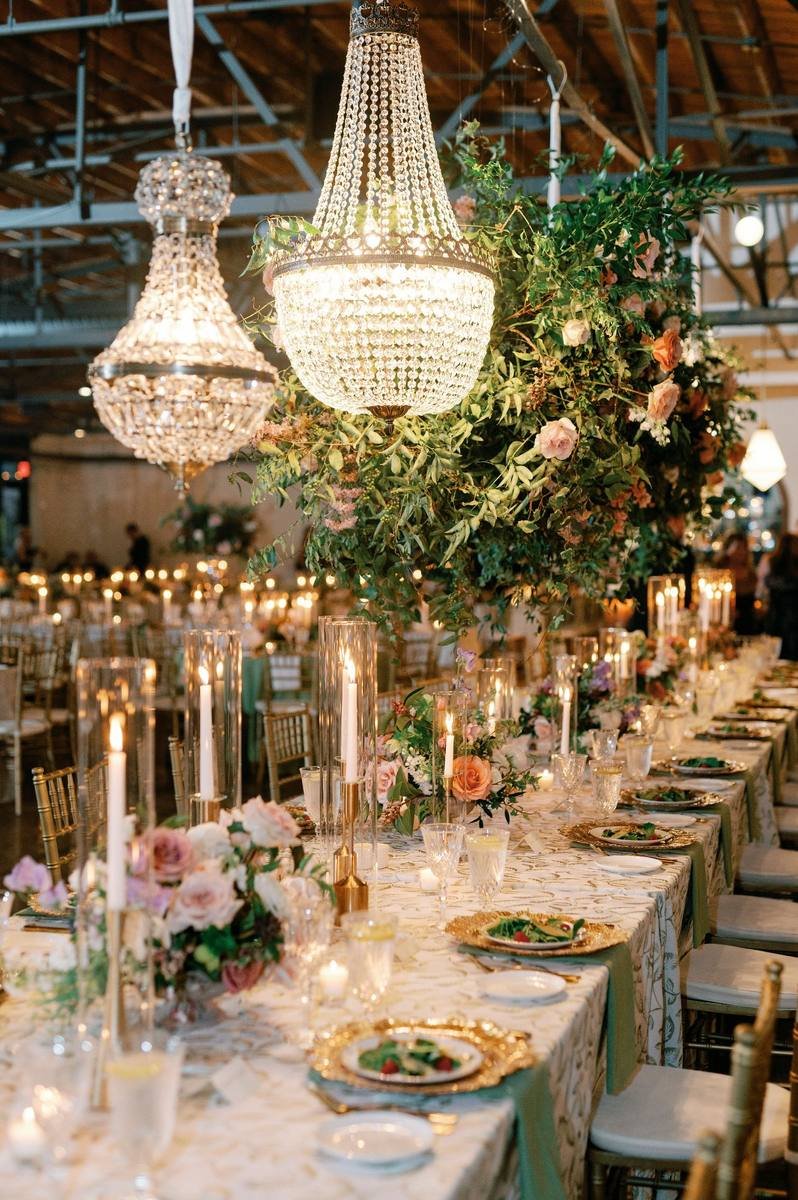
Crystal and Empire pieces, among them the French Empire, the Gatsby and the crystal dome, are the ballroom answer: they multiply every candle on the table. Gilt and silver pieces such as the gold starburst add warmth without the sparkle. Iron and wood, including a plank hung with Edison drops, belong in barns and under sailcloth. Rattan, bamboo and fabric drums soften a modern room or a garden tent.


Sizing a piece to the room
Scale matters more than style. Over a long table, two or three matched pieces read better than one large one; over a dance floor, a single statement piece anchors the room. A common rule of thumb for a dining table is a chandelier about half to two-thirds the table’s width, hung high enough that guests can still see each other across it.
In a tent or a barn, the structure sets the limit. The frame carries the weight, never the fabric.
Rigging is the real work
A chandelier is heavy, it is glass, and it hangs over your guests. Before anything goes up we confirm the rigging points, the load they can carry and the venue’s rules. Certified riggers install and strike every piece. If the structure cannot take a ceiling full of glass, we say so and suggest something that can.
Chandeliers with other lighting
Chandeliers light the air above the tables, not the whole room. Most couples pair them with a warm uplight wash on the walls or a string-light canopy between the pieces, and add pin-spots so the centerpieces beneath the crystal still read in photographs.
What it costs
Chandeliers are priced from the hang. The height, the number of rigging points and the labor to reach them move the number more than the piece itself. Send the venue and the style you like, and the itemized proposal lists the piece, the rigging and the crew as separate lines. The cost guide shows where chandeliers sit among full wedding designs.